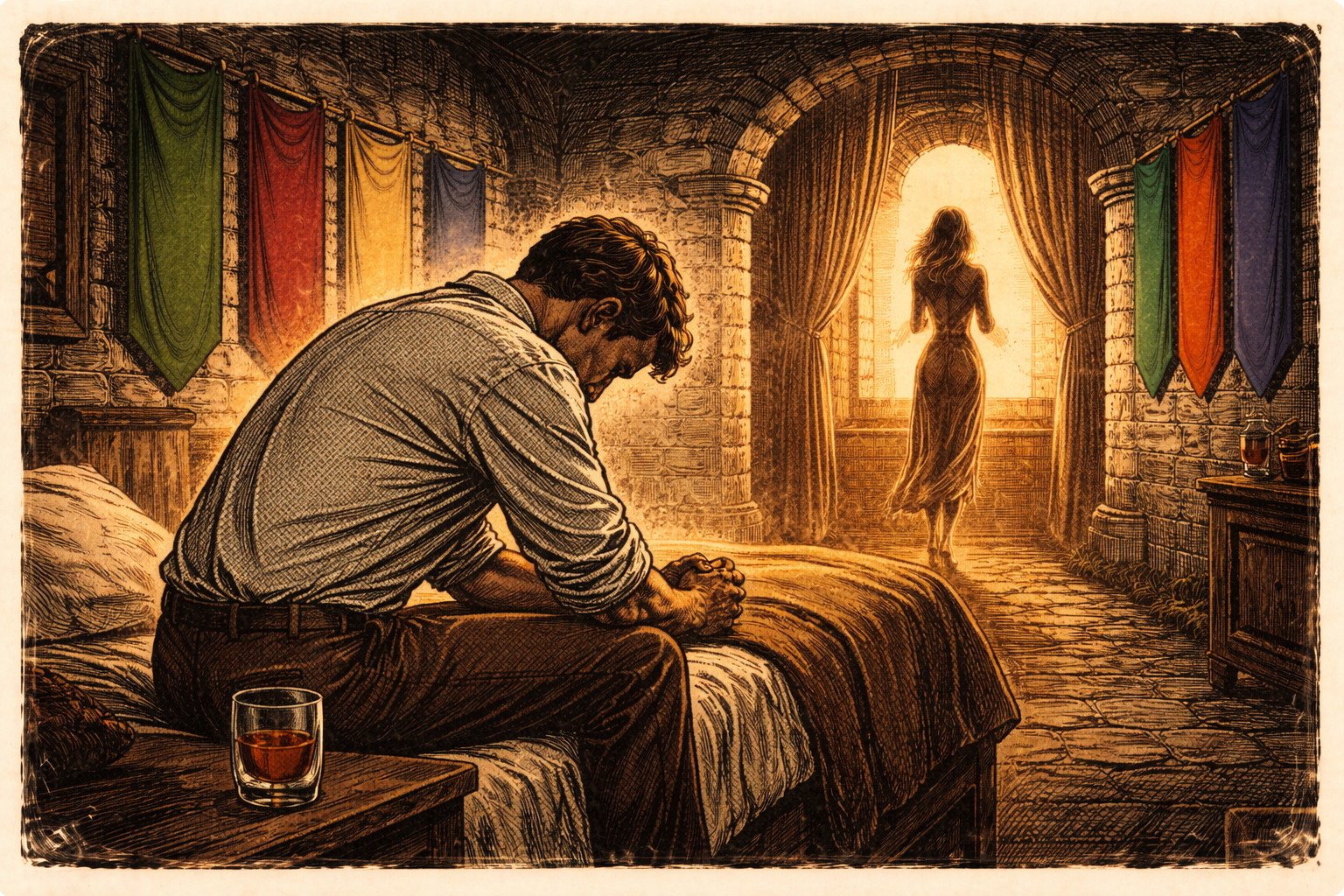
It is easier to catalog her shortcomings than to examine your posture. Easier to replay her tone, her habits, her absences, than to interrogate your own withdrawal. I have done it myself. I have sat in the quiet after an argument and built a careful internal case. I am reasonable. I am trying. She is difficult. She has changed. This is not what I expected.
That narrative can sound like honesty. It is often a way of staying comfortable while the relationship slowly deteriorates.
The dissatisfaction many men feel in marriage is less a verdict on their wives than a mirror held up to their own understanding of commitment.
The Drift That Feels Like Truth
Marital unhappiness rarely arrives in dramatic form. It drifts in through small compromises that do not feel like betrayal, but add up to abandonment.
You stop initiating conversations because they feel tense. You avoid bringing up what bothers you because you anticipate conflict. You allow sarcasm to replace directness. You convince yourself that silence is maturity. Over time you begin to live beside your partner rather than with her. The relationship becomes functional but thin, like a house that still stands but no longer feels warm.
When dissatisfaction surfaces, it appears to confirm what you already suspect. Something about her is the problem. If she were warmer, more attentive, less critical, more affectionate, less distracted, more aligned with you, this would be easier.
But a marriage is not a product you evaluate from the outside. It is a structure you are co-constructing from the inside. If the structure feels unstable, the most important question is not what she is doing wrong. The question is what you have stopped doing right.
Responsibility Is the Missing Frame
Marriage does not survive on affection alone because affection is not stable fuel.
The healthier frame, especially for men who feel dissatisfied, is that you are not simply loving a woman. You are leading a marriage. Leadership here does not mean superiority, control, or winning. It means responsibility for the climate you help create. It means recognizing that your tone, your consistency, your willingness to tell the truth cleanly, and your ability to repair after rupture all shape the emotional architecture of your home.
This matters beyond individual couples because modern marriage is increasingly judged like a mutual satisfaction agreement. If both parties feel fulfilled, the marriage is good. If one or both feel deprived, something must be wrong with the match. That way of thinking turns spouses into services and seasons into verdicts. It trains men to interpret discomfort as proof of incompatibility rather than as a call to character and skill.
Men who reframe marriage as leadership stop waiting to feel loved before they act lovingly. They stop outsourcing the tone of the home to whatever mood walks through the door. They stop using withdrawal as protest. They become the stabilizing force that makes repair possible.
That shift is not sentimental. It is structural.
The Seven Practices That Hold a Marriage Up
Responsibility in marriage takes recognizable forms. It is not vague intention. It is repeatable practice.
Continuity means your commitment is not conditional on mood, conflict, or convenience. Continuity is the decision to stay engaged when it would be easier to go numb. It sounds like, “We are in a hard stretch, but I am here. I am not disappearing.” It also sounds like, “I am committed to us even when I am frustrated.”
Protection means you guard the relationship from forces that corrode it. That includes overcommitment, unchecked resentment, outside voices that undermine unity, and emotional entanglements that begin innocently but erode intimacy. Protection is not paranoia. It is priority. It sounds like, “Let’s protect our time this week.” It sounds like, “I do not want anything interfering with us.”
Kindness means disciplined gentleness in tone and language, especially when tension is real. Kindness does not remove accountability. It removes cruelty. It sounds like, “I want to say this carefully because you matter to me.” It sounds like, “I am upset, but I am not going to talk to you like you are my enemy.”
Honesty means clean, direct truth without manipulation, secrecy, or avoidance. Honesty is not emotional dumping. It is clarity that refuses to keep a hidden ledger. It sounds like, “When that happened, I felt dismissed. I need to talk about it.” It sounds like, “I have been pulling away, and I do not want to keep doing that.”
Understanding means you seek to understand before you react. It is curiosity practiced under pressure. Understanding sounds like, “Help me understand what you meant.” It sounds like, “What was going on for you in that moment?”
Acceptance means you stop trying to remodel your partner into a more convenient version. Acceptance does not mean tolerating harm or abandoning standards. It means releasing the fantasy that love will feel easy once she changes enough. It sounds like, “I want to understand you, not redesign you.” It sounds like, “We can work on this without me treating you like a project.”
Repair means you move toward restoration after rupture. Repair is what separates couples who last from couples who live in permanent unresolved tension. Repair is the willingness to come back to the table, own your part, and rebuild connection without keeping score. It sounds like, “I am sorry for my tone. That was on me.” It sounds like, “Can we reset? I want us good.” It sounds like, “I forgive you, and I want to move forward.”
None of these practices require you to diagnose your wife. They require you to govern yourself.
Resentment Becomes a Lifestyle When Repair Is Avoided
Resentment is rarely a dramatic emotion. It is usually a practice.
It shows up as the sigh before answering. The delay in replying. The quiet sarcasm that can always be defended as a joke. The internal monologue that rehearses her failures and your sacrifices until you feel righteous. Righteousness is emotionally addictive. It gives you a sense of moral high ground without requiring emotional risk.
The cost is that resentment trains you to interpret everything through suspicion. When she is tired, you assume she is selfish. When she is quiet, you assume she is punishing you. When she is direct, you assume she is disrespecting you. You become less curious. You become more certain. Certainty can feel strong, but it often functions as armor.
Honesty interrupts resentment because it refuses hidden scorekeeping. Kindness keeps honesty from becoming a weapon. Understanding keeps conflict from turning into caricature. Repair keeps the past from governing the future.
A man practicing these things does not say, “You always make me feel like I do not matter.” He says, “When you checked your phone while I was talking, I felt invisible. I need you with me.” He does not say, “This marriage is dead.” He says, “I miss us. I want to rebuild connection.” He does not punish with silence. He says, “I am hurt, and I do not want this to grow.”
These moves are small. They are also decisive.
The Comfort of the Compatibility Explanation
A reasonable objection is that marital dissatisfaction is simply incompatibility, or the natural fading of chemistry, or the stress of modern life.
Sometimes that is true. Some relationships involve deep misalignment. Some involve serious harm and require safety, separation, or professional intervention. Any responsible conversation about marriage has to leave room for that reality.
But incompatibility has become the default explanation for ordinary relational strain, and it is seductive because it reduces responsibility. If the issue is the match itself, then your task is simply to endure or exit.
What that narrative often ignores is that many relational breakdowns are less about fixed traits and more about unexamined patterns. A man who withdraws when he feels criticized will withdraw with the next partner. A man who cannot tell the truth without sharpness will cut the next partner too. A man who avoids repair will build the same distance in a different house. Changing partners does not automatically change posture.
The leadership frame accounts for more complexity because it does not deny differences or minimize real problems. It insists that before declaring the marriage defective, you examine what you are practicing inside it. Continuity, protection, kindness, honesty, understanding, acceptance, repair. If these are absent, dissatisfaction is often a consequence of neglect rather than destiny.
What It Means to Lead Without Applause
A man cannot change a marriage alone, but he can change the conditions under which change becomes possible.
Continuity removes the threat that conflict will end the relationship. Protection limits the outside forces that undermine intimacy. Kindness makes truth bearable. Honesty prevents resentment from rotting in silence. Understanding reduces the impulse to retaliate. Acceptance releases the remodeling project that turns love into negotiation. Repair keeps rupture from becoming permanent.
This series is about becoming a man whose integrity is not dependent on how easy his partner is being on a given day. That is what it means to lead without applause.
Most men want their marriage to feel better. A more durable goal is to become better inside the marriage. That change is measurable. It shows up in tone. It shows up in consistency. It shows up in the speed of repair. It shows up in whether you keep your word when it costs you something.
Marriage is not designed to comfort a man into stagnation. It is designed to expose him. It reveals where he is reactive instead of steady. Where he protects ego instead of connection. Where he avoids truth instead of standing inside it. Marriage is a refining fire. It does not attack weakness. It illuminates it. What it reveals is not a verdict but an invitation. It is an invitation to grow up, to deepen, to strengthen, and to lead with integrity rather than impulse.

Marriage will continue to reveal where you are steady and where you are still reactive. If you resist the urge to defend yourself or diagnose her, it becomes more than exposure. It becomes instruction. It shows you where your leadership leaks and where it must be reinforced.
Marriage is not a contract to maintain with minimum effort. It is a container that forges character under pressure. It requires steadiness when you would rather withdraw. It requires responsibility when you would rather critique. It requires self mastery when you would rather be understood first.
The seven principles below are not concepts to admire. They are practices to enter. They are not traits you claim. They are disciplines you embody. Each one asks something of you. Each one will confront your habits. Each one will strengthen the structure of your home if you allow it to shape you.
- Continuity: Commitment that remains lifelong and non conditional, stability that does not fluctuate with mood or conflict.
- Protection: Guarding her emotional, physical, and reputational safety, creating refuge through your leadership.
- Kindness: Disciplined gentleness in tone, language, and behavior, especially when tension is present.
- Honesty: Clean and direct truth without manipulation, secrecy, or avoidance.
- Understanding: Choosing curiosity before reaction, listening before correcting.
- Acceptance: Allowing imperfection while still calling both of you toward growth.
- Repair: Moving toward restoration after rupture, prioritizing reconnection over pride.
The next step is not to agree with these in theory. It is to examine yourself through them. Where are you inconsistent? Where are you passive? Where have you been waiting for her to change before you deepen your posture?
Go through each principle slowly. Let it search you. Then begin forging a stronger stance in your marriage, not louder, not harsher, but steadier. Leadership in your home is not about force. It is about direction.
You are not trying to win arguments. You are deciding what kind of man will hold the frame of this covenant.
Stand up in that responsibility. Then go deeper.