For years, my Saturday mornings belonged to a patch of grass, a set of chains, and a loose circle of men who knew exactly where they were supposed to be.
At 10:00 a.m., we teed off.
It did not matter if five men showed up or fifteen. It did not matter if the sky threatened rain or the wind cut across the fairway. The only variable was the course, and even that was announced ahead of time. The rhythm never changed: Saturday, 10:00, eighteen holes.
I started the league as a simple recreational invitation. Join the Facebook group—later the WhatsApp thread—watch for the course announcement on Thursday or Friday, and show up if you want. There were no dues. No penalties. No guilt if you missed a week.
What surprised me was not that men enjoyed playing. It was how the consistency changed them.
They began to protect the time. They shifted errands. They negotiated around it. They invited friends. Over time, a core group formed. Others floated in and out. The league ran for years with very little friction because there was almost nothing to negotiate. Everyone knew the score.
The time did not move.
That experience shaped me more than I realized. Once you have watched consistency build momentum, you become sensitive to its absence. You notice when a group feels solid under your feet—and when it feels like standing on sand.
Recently, I found myself in a different kind of circle: a group of men trying to coordinate a recurring call. From the beginning, I was clear about the evenings that did not work for me. Others shared their constraints too. That part felt adult and straightforward.
What wore me down was not missing a week here or there. It was the churn.
A date would be proposed. Agreement would form. Then someone would ask if we could shift it to accommodate another conflict. The thread would reopen. New options would surface. The ground moved again.
Each change required recalculation. Each recalculation required energy. The conversation circled around what else was possible.
I began to realize that my frustration was not about being excluded. It was about instability. I did not need perfect attendance. I needed a fixed container.
Commitment does not grow from flexibility; it grows from stability. Groups become strong not by endlessly adjusting to everyone’s schedule, but by holding a structure steady long enough for people to organize their lives around it.
This is not merely a preference for order. It reflects something fundamental about how adults build habits and how communities endure. Without a stable structure—an unmoving surface—effort has nowhere to accumulate.
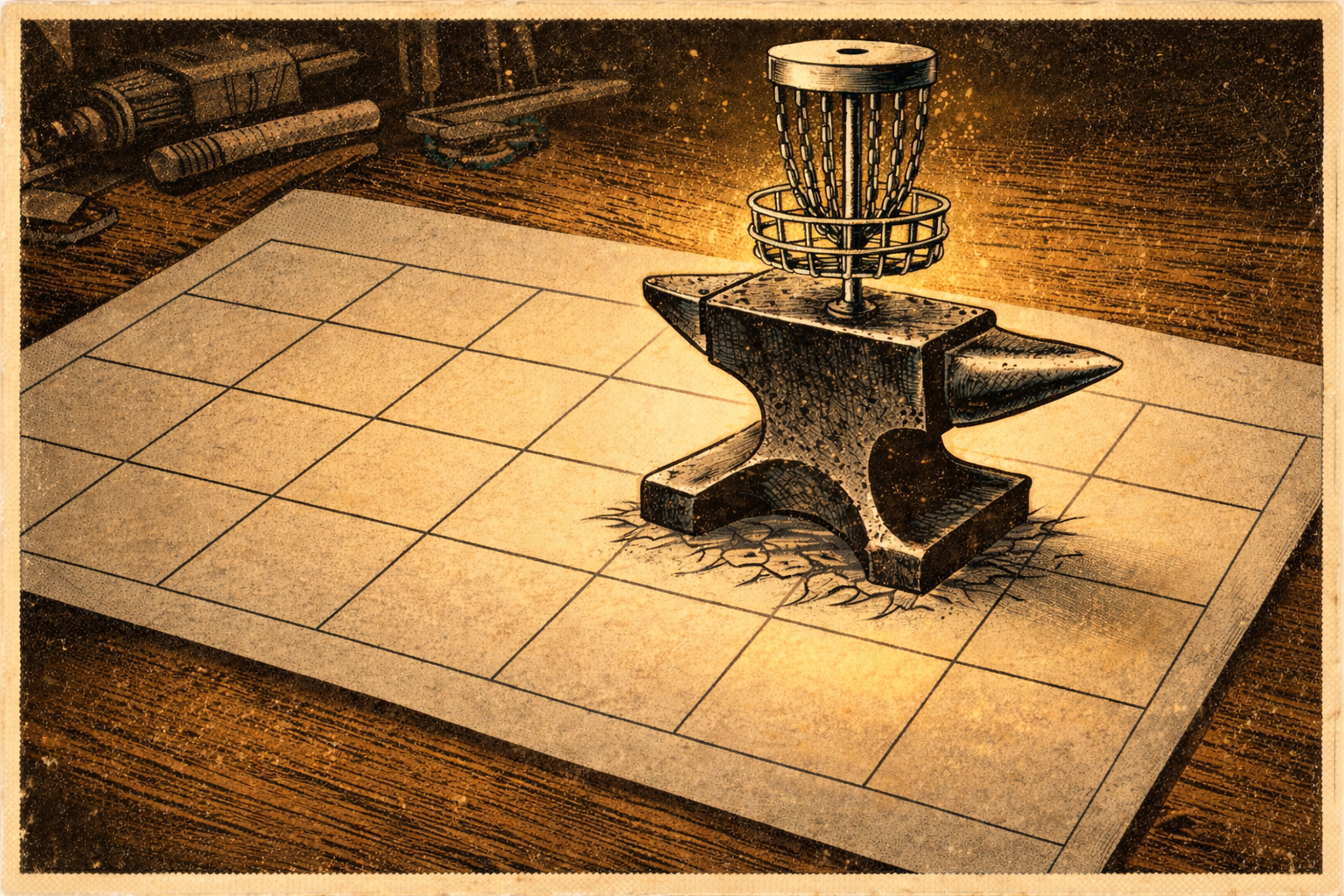
In metalwork, an anvil provides that surface. The hammer swings. The metal bends. The fire flares. But the anvil stays put. Without it, force scatters. With it, force becomes form.
A weekly gathering needs its own anvil. A fixed day. A fixed time. A rhythm that does not require renegotiation every seven days.
When the meeting time shifts constantly, even for good reasons, the group remains provisional in the mind. People do not reorganize their lives around something that may move next week. They treat it as optional. And optional things are the first to be displaced.
My disc golf league flourished not because we optimized for maximum attendance each Saturday, but because we eliminated uncertainty. The invitation was clear, this is when we play. Join if you want. No resentment if you cannot. No debate about the time.
Over months and years, that consistency built identity. Saturday morning became part of who we were.
By contrast, when a group keeps reopening its schedule, it unintentionally communicates that nothing here demands priority. The effort to include everyone each week undermines the possibility of building something durable over time.
That said, life is crowded. Work shifts change. Children have games. Isn’t flexibility a form of care?
Yes—but only within a stable frame.
A structure can be reassessed at defined intervals. It can adapt for seasons. What it cannot do, if it hopes to build commitment, is renegotiate itself every week. That is not adaptability. That is drift.
Consistency may mean that some people miss some meetings. But over the long run, it produces more participation, not less. Stability reduces decision fatigue. It lowers the cost of showing up. It allows the gathering to move from “maybe” to “this is what we do.”
The deeper issue is not scheduling. It is formation. We become reliable by organizing our lives around fixed commitments. Groups become trustworthy when they hold their shape.
Commitment does not grow from flexibility; it grows from stability. Without an anvil, there is only motion. With one, there is momentum.
I learned that on a disc golf course at 10:00 a.m. on Saturdays. And now, whenever I feel the ground shift under a group’s plans, I recognize what is missing.
Not enthusiasm. Not goodwill.
Just something solid enough to stand on.