You are reading Principle 6 of 7 in this Marriage Series. Each builds on the one before it. These are structural commitments that form the framework of a marriage that does not drift when emotion shifts.
Start here: A Letter to the Man Who Knows Something Is Off.
Structure Determines Whether Growth Survives
Growth collapses under pressure when structure becomes coercion rather than support.
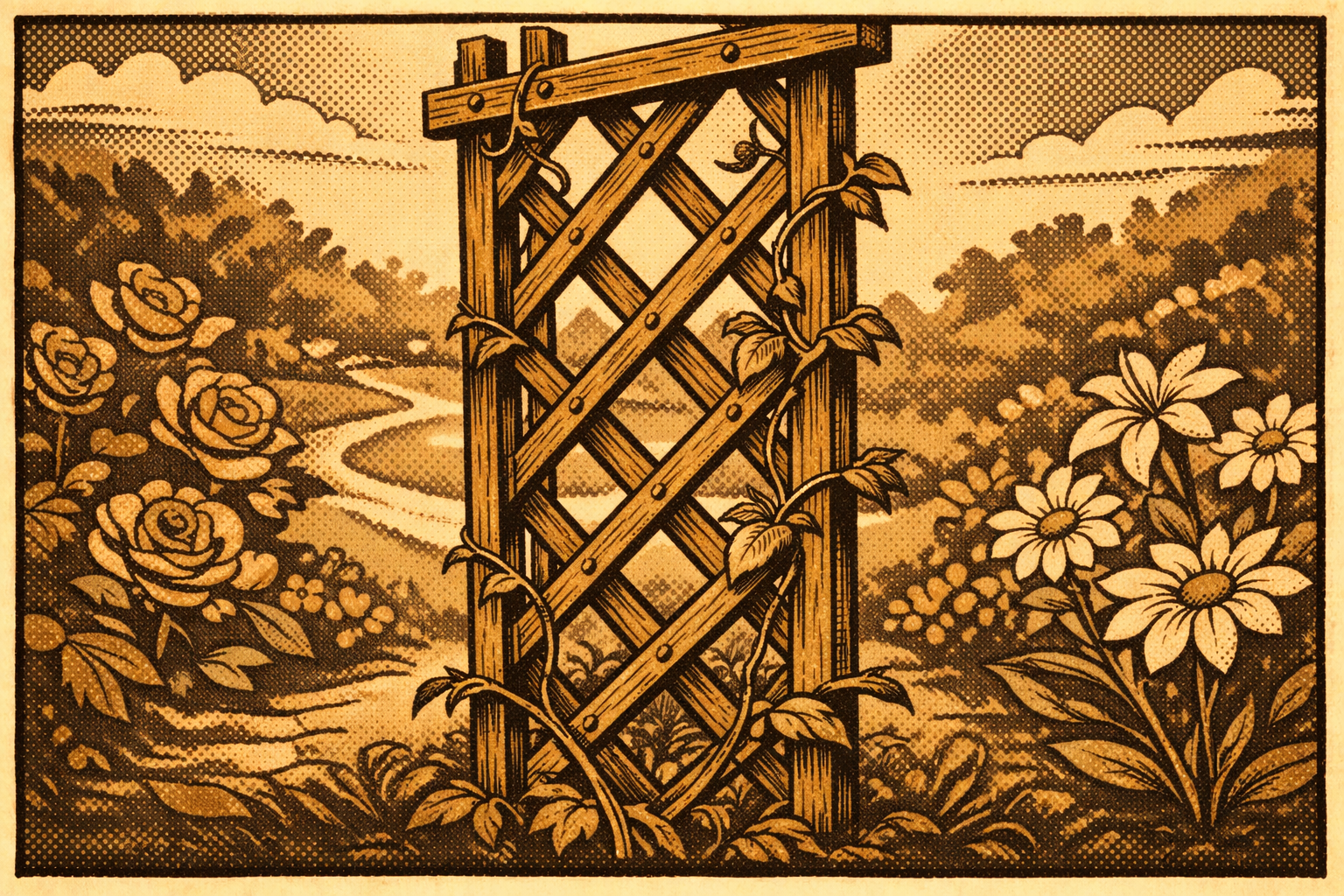
Anyone who has trained a climbing plant knows the impulse to interfere. The vine bends sideways. It clings to the wrong surface. It grows unevenly, or too slowly, or in a direction that disrupts the tidy geometry imagined at the start. The temptation is to tug it upward, to twist it into place, to hurry what seems inefficient. But a plant pulled by force does not become stronger. It becomes damaged. What allows it to rise is not pressure but structure.
A trellis does not force growth. It makes growth possible.
The wooden lattice stands still while the vine searches for purchase. It does not accelerate development. It provides direction and boundary, allowing the plant to climb in its own time. The trellis absorbs strain without complaint. It remains firm without becoming rigid. It does not measure worth by speed.
Marriage development depends on the same principle.
Acceptance Is the Structure That Makes Growth Possible
Acceptance is the trellis of a marriage. It is the quiet structure that allows two unfinished people to grow without fear of being disqualified for their imperfections. It does not eliminate standards. It separates identity from performance. It refuses to confuse a misstep with a verdict.
A man dissatisfied in his marriage often believes the problem is insufficient improvement. He wants clearer communication, steadier emotion, more consistency, more alignment with his preferences. None of these desires are inherently wrong. The error lies in believing that growth emerges from pressure rather than from safety.
Acceptance creates the safety that makes growth sustainable.
To accept is not to approve of every behavior. It is to hold the person steady while addressing the behavior directly. It is to correct without humiliating. It is to confront without threatening belonging. It is to say, through tone and action, that imperfection does not jeopardize connection.
Control Weakens What It Tries to Improve
This stance requires discipline. When disappointment accumulates, the instinct is to tighten control. Critique sharpens. Affection is withheld. Silence becomes a tactic. A subtle message is sent that love fluctuates with performance. In that atmosphere, vulnerability contracts. Improvement slows. Resentment grows roots.
The trellis metaphor clarifies what leadership actually demands. The trellis does not chase the vine. It does not beg it to grow. It does not compare it to neighboring plants. It stands, steady and available. The vine grows because it has something reliable to climb.
Acceptance in marriage functions as that reliability.
When she expresses emotion imperfectly, you do not shame it. You listen long enough to understand the experience beneath it. When she fails to meet an expectation, you address the expectation cleanly while affirming her value. When conflict exposes weakness in both of you, you do not use it as evidence of incompatibility. You treat it as evidence of humanity.
Conditional Belonging Creates Fragility
The deeper truth is that marriage does not stagnate because partners are flawed. It stagnates because flaws are treated as threats rather than as material for growth. A relationship governed by conditional belonging becomes fragile. Every mistake carries disproportionate weight. Every disagreement feels existential.
Acceptance stabilizes the structure so that conflict can be endured without collapse.
There is a widely held belief that acceptance breeds complacency. If you accept too much, the thinking goes, standards erode. Problems linger. People stop striving. This concern sounds reasonable, particularly to a man who fears passivity or mediocrity.
But acceptance is not indulgence. Indulgence avoids discomfort. Acceptance faces it without panic.
A trellis does not lower the direction of growth. It insists on upward movement by providing the framework for it. In the same way, acceptance allows you to maintain expectations without weaponizing them. It invites accountability while preserving dignity. Growth becomes a shared project rather than a contested demand.
Stewardship Strengthens the Frame
Control, by contrast, produces compliance at best and quiet rebellion at worst. A partner who feels constantly evaluated will eventually protect herself. She will offer what is required but not what is vulnerable. The marriage may appear stable, yet intimacy thins. Development slows not because standards were absent, but because safety was.
Stewardship replaces control with responsibility.
To steward a marriage is to manage the environment rather than micromanage the person. It is to ask whether your tone invites openness or defensiveness. It is to examine whether your reactions make honesty safer or riskier. It is to consider whether your leadership strengthens the framework or shakes it.
The governing question shifts from how to change her to how to maintain the structure that supports growth.
This shift is neither sentimental nor weak. It demands self regulation. It demands the restraint to pause before reacting. It demands the humility to admit your own imperfections without collapsing into shame. Acceptance must extend inward as well, or it becomes brittle. A man who cannot tolerate his own flaws will struggle to tolerate hers.
The trellis stands because it is anchored. Its stability does not depend on the vine’s behavior. Likewise, acceptance in marriage cannot fluctuate with mood or momentary disappointment. If belonging rises and falls with daily performance, the structure is already unstable.
The Structure Holds
When acceptance governs the climate of a home, development becomes possible again. Conversation deepens. Correction feels constructive rather than condemning. Effort increases not out of fear, but out of trust. Imperfections remain, yet they no longer threaten the bond.
The plant still bends. Growth still takes time. Weather still tests the frame. But the structure holds.
A marriage does not need relentless evaluation to mature. It needs steadiness. It needs a framework strong enough to absorb imperfection without splintering. Acceptance provides that frame.
The man who understands this stops pulling at the vine. He stops measuring daily progress as proof of worth. He commits to reinforcing the lattice instead. In doing so, he creates the conditions under which real growth occurs.
The question is not whether imperfection will appear. It will.
The question is whether the structure will be strong enough to hold it.
Acceptance answers that question not with force, but with form. It stands, steady and deliberate, allowing two people to climb higher than pressure ever could.
Continue to Repair
Acceptance doesn’t mean complacency.
You will both fail.
You will both miss.
You will both wound.
The strength of a relationship is not measured by the absence of rupture, but by the speed and humility of repair.
And this is where most men either rise… or retreat.
Next, we step into Repair — moving toward restoration after conflict.
Because the man who cannot repair will slowly lose what he refuses to fight for.